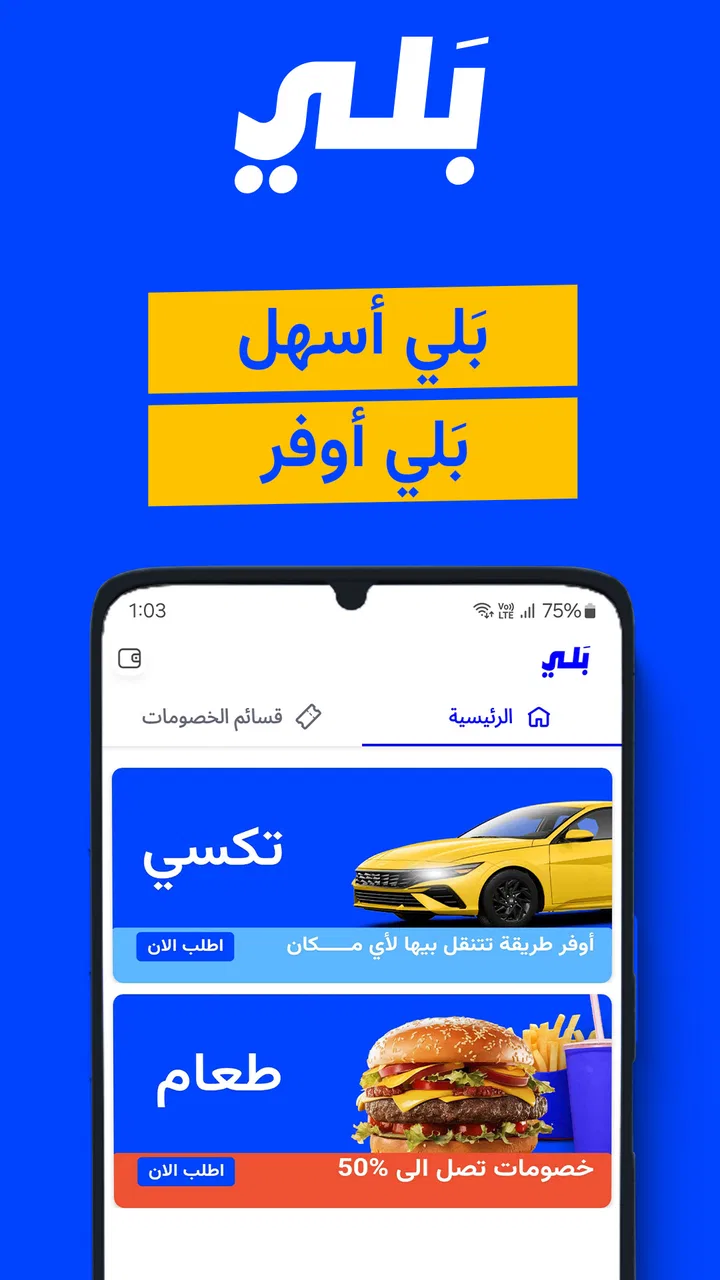
Baly | Order Taxi and Food
- 4.5
- Rating
- 10.00M
- Installs
- Free
- Price

 Analysis by App-foxy
When I need to solve two small travel problems at once—getting somewhere and finding something to eat—I prefer an app that keeps the process in one place. That is the practical appeal of Baly | Order Taxi and Food. It is a free Travel & Local app from Two Rivers that combines taxi rides with restaurant food ordering, so the journey does not have to be split between separate services.
I approached it as I would on an ordinary day: imagine arriving in an unfamiliar area, feeling hungry, and wanting to avoid switching between a transport app, a restaurant platform, and a map. Baly is built around that kind of moment. Its store summary focuses on restaurant meals and taxi rides, but the useful question is whether the handoff between those needs feels simple enough to justify keeping another app installed.
My overall impression is positive, especially for people who value convenience over having the widest possible choice in each individual category. The app has a 4.4 average from around 396 thousand ratings, and it has passed 10 million installs, which gives it a substantial user base. Still, popularity does not remove the need to check the details of a particular ride or order. The strongest experience comes when the local coverage, available restaurants, and taxi supply line up with what I need.
You May Also Like

 Pandora - Music & Podcasts
Pandora’s Music Is Easy to Start, but Harder to Recover
Pandora’s strength is its low-effort path from a seed to a station. Its weak spot is how much confidence it asks you to place in connection, setup, and quiet recovery.

 AccuWeather: Weather Radar
AccuWeather Review: A Quick, Clear Forecast for Everyday Decisions
For everyday plans, the best forecast is the one you can understand quickly. AccuWeather makes rain timing, radar, and local conditions easy to act on, with a few trade-offs.

 Hill Climb Racing
Why Hill Climb Racing Still Turns Crashes Into One More Run
A tiny car, a bumpy hill and one more upgrade: Hill Climb Racing keeps resurfacing because its simple chaos makes every near-miss feel personal.

 AliExpress - Shopping App
AliExpress Makes Global Shopping Feel Personal, but Shoppers Bear the Risk
AliExpress turns a global marketplace into a pocket-sized discovery engine. Its reach is useful, its shopping loop compelling, and its trade-offs easy to miss.

 Lords Mobile: Kingdom Wars
Lords Mobile Is a Kingdom-Building Routine, Not a Quick Match
A case-by-case verdict on the building, battles, device demands, and social commitments that make Lords Mobile rewarding for some players and exhausting for others.

 PDF Scanner app - TapScanner
TapScanner Makes Paperwork Easier to Capture, Check, and Share
TapScanner makes scanning with a phone feel less like a rescue operation and more like a dependable step in getting work done. Its capture tools are useful, though not flawless.
More From Our News Desk
View All News


From an empty stomach and an unknown route to a completed order
I find it useful to treat the first screen as a decision point: am I solving a journey, a meal, or both? Starting with the more time-sensitive need helps me avoid getting sidetracked and gives the rest of the session a clear purpose. That simple habit also makes it easier to judge whether the combined workflow is saving effort in the moment.
Starting with the real problem, not the app menu
The best way to use Baly is to begin with a clear outcome. If I am already outside and need transport, I can focus on the taxi side. If I am settled in a hotel or apartment and want food brought to me, I can start with the restaurant side. The combined design matters most when those tasks are connected: for example, arranging a ride to a new location and then ordering a meal once I arrive.
That sounds obvious, but it changes how I think about the app. I would not open it simply to browse endlessly. I would open it with a destination, a meal idea, or both. This keeps the experience more efficient and reduces the temptation to compare every possibility before taking action.
For a visitor, the main advantage is reduced app switching. A typical alternative might mean using one service for a taxi, another for restaurant delivery, and a separate map or messaging tool to coordinate the address. Baly does not eliminate every decision, but it gives the trip and food parts a common starting point. That is especially useful when I am dealing with unfamiliar streets or do not want to explain the same location repeatedly.
Choosing between transport and food
The two services serve different kinds of urgency. A taxi request is usually time-sensitive: I need to know where I am going and when I want to leave. A food order is more flexible, but accuracy matters because the delivery location and meal selection determine whether the experience ends well. I find it helpful to decide which one has priority before opening the relevant section.
If I am rushing to an appointment, I would arrange the taxi first and avoid spending time browsing meals. If I am waiting at a hotel, I would confirm the delivery location before choosing dishes. That small change in order prevents a common mistake: becoming absorbed in the menu and only later realizing that the destination or delivery point needs correction.
The practical strength is the shared workflow, not merely the presence of two services. Baly is most appealing when reducing handoffs matters more than using the most specialized taxi or food app available.
Building a taxi request carefully
For a taxi ride, I would treat the pickup point as the first important checkpoint. In an unfamiliar place, the address shown on a map may not match the easiest place for a driver to stop. A hotel entrance, side street, shopping center entrance, or landmark can be more useful than a broad location pin. Before confirming, I would look at the pickup point from the driver’s perspective rather than assuming the first suggested position is ideal.
The same care applies to the destination. If I am heading to a large building, I would use the most recognizable entrance or add a clear instruction where the app allows it. This is one of the less obvious habits that can make a taxi app feel much better: many delays blamed on drivers actually begin with a vague pickup point.
Baly’s taxi function is therefore more useful when I prepare the location before requesting the ride. I would not rely on the app to understand a complicated meeting point automatically. For a simple hotel-to-airport or address-to-address trip, the process should be easier. For a crowded venue or a location with several entrances, I would allow extra time and check the driver handoff carefully.
Ordering food without creating a delivery problem
On the food side, I would first confirm where the order should arrive. A hotel lobby, apartment entrance, office reception, or private residence can each require a different handoff. If I am staying somewhere temporarily, I would include the room or building information when the order flow provides a place for it, while also being ready to meet the courier at the entrance if that is simpler.
Then I would choose the meal with the delivery context in mind. Food that travels well is a safer choice when I am far from the restaurant or uncertain about the handoff. I would also review the basket before placing the order instead of assuming that a familiar meal has been selected exactly as intended. Small choices such as portions, additions, or exclusions can matter more than the browsing experience.
This is where Baly differs from simply calling a restaurant. Phone ordering can work well when I already know the place, but it often requires explaining an address and confirming the order verbally. Baly gives me a more structured route from restaurant selection to delivery destination. The trade-off is that I need to pay attention to what the app displays rather than relying on a conversation to catch mistakes.
The handoff between screens, drivers, restaurants, and couriers
The most important part of a combined taxi-and-food service is not the first tap. It is what happens after the request leaves my hands. A taxi request depends on the driver finding me and understanding where to stop. A food order depends on the restaurant preparing the right meal and the courier reaching the correct delivery point. In both cases, the app is the bridge, but the real-world handoff still needs attention.
For a taxi, I would keep my phone available and watch for changes in the ride status. I would also avoid standing somewhere that makes identification difficult. A visible entrance or a safe waiting point usually produces a smoother meeting than remaining inside a crowded lobby without clear instructions.
For food, I would keep the delivery location accessible and respond promptly if the courier needs clarification. This is particularly important in buildings where a driver cannot easily reach the door. The app can organize the order, but it cannot physically solve a locked entrance, an unclear apartment block, or a reception desk that accepts deliveries only at certain points.
That distinction is useful for setting expectations. Baly can reduce coordination, but it cannot guarantee that every handoff will be effortless. I see it as a coordination tool rather than a substitute for checking the physical details of the trip or delivery.
A realistic evening workflow
Consider a simple scenario: I arrive in a city after a long day, check into accommodation, and want dinner without walking around with luggage. I would first settle the taxi portion if I still needed transport from the station or airport. Once I reached the accommodation, I would confirm the delivery point, browse nearby restaurants, select a meal that suits the wait, and review the order before submitting it.
During the wait, I would keep the phone close and make sure the entrance is easy to identify. When the courier arrives, the handoff should be quicker because the location was prepared in advance. The result is not glamorous, but it is exactly the kind of everyday convenience that makes a local services app worthwhile: fewer separate searches, fewer repeated address explanations, and less need to leave the building again.
There is also a useful reverse workflow. If I am meeting friends somewhere unfamiliar, I can arrange a taxi first, then use the food service later when the group has decided what it wants. In that situation, the app becomes a practical companion across the evening rather than a single-purpose tool.
What the app does well for regular users
The first strength is concentration. Keeping taxi and food ordering together makes sense for travelers, temporary residents, and anyone who frequently moves between neighborhoods. I do not have to remember which service covers which need before I begin.
The second strength is accessibility. Baly is free, carries an Everyone content rating, and supports devices running Android 7.0 or later. That makes it approachable for a broad range of Android users, including people who are not using the newest phone. Its current version is 3.2.1, so I would still keep the app updated through the normal store process to receive the version intended for my device.
The third strength is the combination of planned and immediate use. I can think ahead about a meal or use the taxi service when a route changes unexpectedly. That flexibility is more valuable than a simple restaurant directory because the app connects a local need with an action.
Its rating and install base also make it feel less like a niche experiment. I would be more comfortable suggesting it to a friend who wants one local app to try first, particularly when that friend is visiting an area where Baly operates actively.
Where it compares favorably with usual alternatives
Compared with a dedicated taxi app, Baly may be more convenient when I also need food and want to keep the same local service in mind. Compared with a restaurant-only delivery app, it offers a broader travel context. Compared with calling restaurants and taxis separately, it gives me a more consistent digital workflow and reduces repeated explanations.
However, a specialized alternative may still be better in a specific situation. If my only concern is comparing many taxi providers, a transport-focused app may offer a broader set of choices in the area I am visiting. If I care primarily about restaurant variety, dietary filtering, or a particular ordering ecosystem, a dedicated food platform may be easier to evaluate. Baly’s value comes from combining needs, not from automatically being the deepest specialist in both.
I would also avoid assuming that the same experience applies everywhere. Local coverage determines whether the restaurant and taxi sides are genuinely useful at a particular moment. Before depending on it for an important airport transfer or a time-sensitive meal, I would open the app and check what is actually available around my location.
Where the flow breaks down
The first possible break is location ambiguity. A pin can be technically correct but practically inconvenient. This matters for both a driver and a courier, so I would spend a few seconds checking the entrance, not just the street name.
The second is timing. A taxi request and a food order involve different kinds of waiting, and neither should be treated as perfectly predictable. If I have a flight, appointment, or event, I would build in a buffer rather than planning around the shortest possible pickup or delivery time.
The third is choice depth. A combined app can be simpler, but simplicity may come with fewer options than the largest specialist service. Someone who wants to inspect every restaurant, compare every transport option, or use a very specific ordering preference may find the broader alternative more suitable.
The fourth is the human handoff. A wrong entrance, an inaccessible building, or an unresponsive phone can create friction even when the digital order was submitted correctly. My advice is to treat the final meeting point as part of the order itself. Keep it clear, stay reachable, and choose a location where a driver or courier can safely stop.
These are not reasons to dismiss Baly. They are reasons to use it with realistic expectations. The app simplifies coordination, but it does not remove the physical details that make local transport and delivery succeed.
Who should install it, and who should skip it
I would recommend Baly to travelers who want one starting point for taxis and meals, residents who regularly use both services, and people who dislike switching between several local apps. It is also a sensible first choice for someone visiting an area covered by the service and wanting a straightforward way to test local transport and food ordering without paying for the app itself.
I would be more cautious about recommending it to someone who needs a highly specialized service. If the trip is critical and I require extensive transport comparison, I would check a dedicated taxi option as well. If food selection is the main priority, I would compare the available restaurants with a specialist delivery service before committing.
I would also skip relying on it as my only plan when I have no time buffer. For an important departure, a prearranged transfer or another confirmed transport method may be safer. For a meal needed at an exact minute, direct coordination with a known restaurant could sometimes be more appropriate. Baly is strongest for ordinary, flexible needs where convenience matters more than absolute control.
My final take after following the whole journey
Baly succeeds because it connects two common local tasks without making me decide which separate app to open first. From choosing a pickup point or delivery address to managing the final handoff, the experience is most useful when I prepare the real-world details instead of expecting the interface to solve them automatically.
Two Rivers has made a practical Travel & Local app rather than a complicated travel planner. The free price and Everyone rating make it easy to try, while the established audience suggests that it has become a familiar option for many users. I especially like it for evenings in an unfamiliar place, short city trips, and routine moments when I need transport and food but do not want to manage multiple services.
My recommendation is simple: install Baly | Order Taxi and Food if you value a combined workflow and the service is active where you live or travel. Before depending on it, check local availability, prepare a precise meeting point, and leave room for real-world delays. Used that way, it can turn a scattered set of small errands into one manageable process. If you need the deepest restaurant selection or the widest transport comparison, keep a specialist alternative in mind—but for convenient everyday coordination, Baly is a worthwhile app to have ready.
FAQs for Baly | Order Taxi and Food
01What services does Baly offer?
Baly provides a dual service platform where users can order taxis and food delivery. The app aims to streamline everyday convenience by offering quick and reliable transportation alongside a wide variety of dining options from local restaurants. This dual functionality makes it a versatile choice for users seeking both transport and food solutions.
02How user-friendly is the Baly app interface?
The Baly app is designed with simplicity and ease of use in mind. Its intuitive interface allows users to quickly navigate through the app, whether booking a ride or ordering food. Features like real-time tracking, estimated arrival times, and an easy checkout process enhance the user experience, making it accessible for all age groups.
03Are there any safety features for taxi rides on Baly?
Yes, Baly prioritizes user safety with features such as driver verification, real-time ride tracking, and the ability to share your trip details with friends or family. Additionally, there is an in-app emergency button to alert authorities if needed. These measures ensure a secure ride experience for all users.
04What payment methods does Baly accept?
Baly offers a variety of payment options to ensure convenience for its users. You can pay using credit or debit cards, mobile wallets, or even cash, depending on your preference. The app securely processes payments, ensuring all transactions are safe and hassle-free. This flexibility caters to a wide range of user needs.
05How does Baly handle customer support?
Baly provides efficient customer support through multiple channels, including in-app chat, email, and phone support. The support team is responsive, addressing queries and issues promptly. Whether you have questions about your order or need assistance with the app, Baly's support ensures a smooth user experience.
Pros
- User-friendly interface for easy navigation.
- Quick booking process for taxis and food.
- Multiple payment options available.
- Real-time tracking of your orders.
- 24/7 customer support for assistance.
Cons
- Limited availability in smaller cities.
- Occasional app crashes reported.
- High demand may cause delays.
- Lack of customization for orders.
- GPS accuracy can be inconsistent.

Baly | Order Taxi and Food
Gallery